
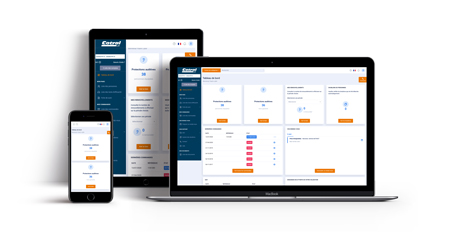
Validate the effectiveness of your hearing protection devices
With CAPA©, you can validate each employee's level of hearing protection. Make sure your employees are protected while taking their CAPA test.
The CAPA© solution
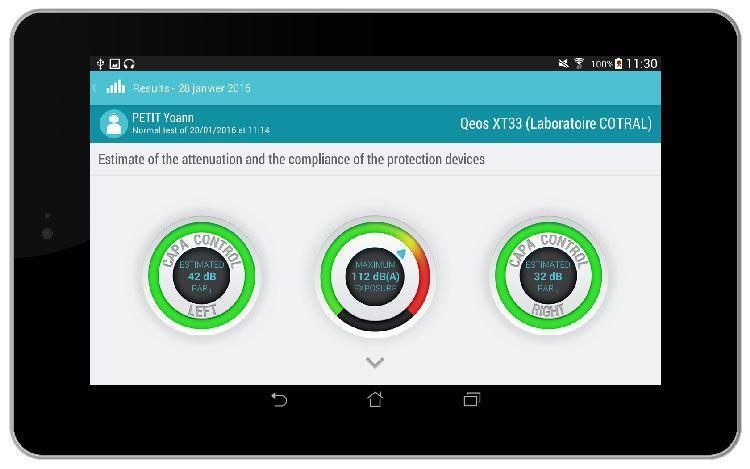
With CAPA©, you can quickly and easily validate how effective your hearing protection devices are. This is also known as "hearing protection fit testing".
(Developed by HearingProTech®)
How does a CAPA© test work?
Two options are available:
- Purchase the software and the tablet to perform the tests in full autonomy
- Ask for a Hearing Protection Specialist to perform the tests at your facility
Results and compliance certificates are recorded in your own online secured-access area.
See relevant data from a survey by the French Institute for Scientific Research (INRS), provided by HearingProTech®: Suitability of Commercially Available Systems for Individual Fit Tests of Hearing Protectors.
Custom moulded earplugs: On-site Assessment and Validation
Schedule an on-site annual effectiveness assessment and validation at your facility. Your local Hearing Protection Specialist will work with you to:
- Determine the integrity of each hearing protector.
- Ensure that the filter being used is consistent with the noise level in your facility.
- Perform a CAPA© test to be sure that attenuation is consistent with the certification.
If the assessment results in a “Non-Compliant” rating, the repeat manufacture of your hearing protection devices is provided at no extra-charge under the Effi-6 Guarantee, as follows:
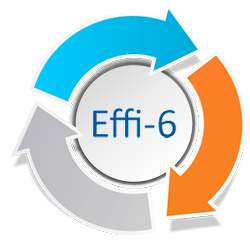
With Effi-6, you can rest easy!
Full warranty for 6 years:
Material Warranty
For any material defect
Comfort Warranty
If they are not comfortable
Efficiency Warranty
If the efficiency checks are not compliant
Your questions on how to validate the efficiency of hearing protection devices:
Use CAPA© to determine whether your employees' hearing protectors are still reducing noise effectively after years of use. It validates whether the intra-ear hearing protection devices:
- Comply with manufacturer specifications
- Efficiently protect employees
Cotral Lab offers 3 possibilities for conducting efficiency tests:
- Buy the software and equipment to conduct the tests in full autonomy
- Borrow the software and equipment to conduct the tests for a limited period
- Choose the full service option provided by Hearing Prevention Specialist at your organisation's
Several scientific studies have established that the external ear grows throughout life. The custom moulded earplug is generally a replica:
- Of a part of the auditory canal
- Of a part or even the totality of the earlobe
- Of the ear hook, sometimes
No study has yet established that ear growth has an impact on the ear canal. As a result, Cotral Lab recommends testing custom moulded earplugs devices at the end of the guarantee period. If they are still efficient, your employees can continue using them to ensure their hearing health. However, if the test reveals that hearing protection devices do not reduce noise as much as they used to, you must renew the devices.